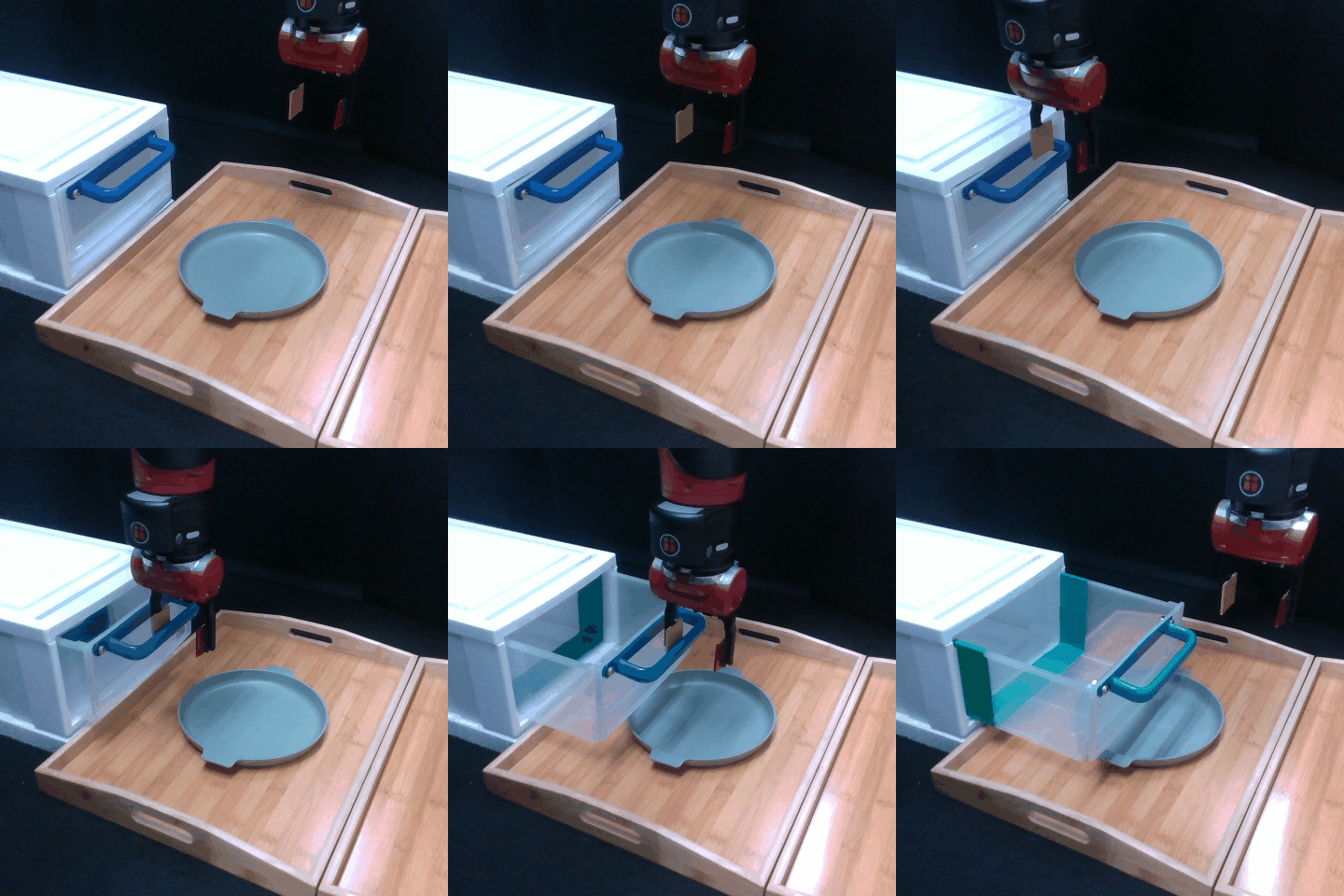
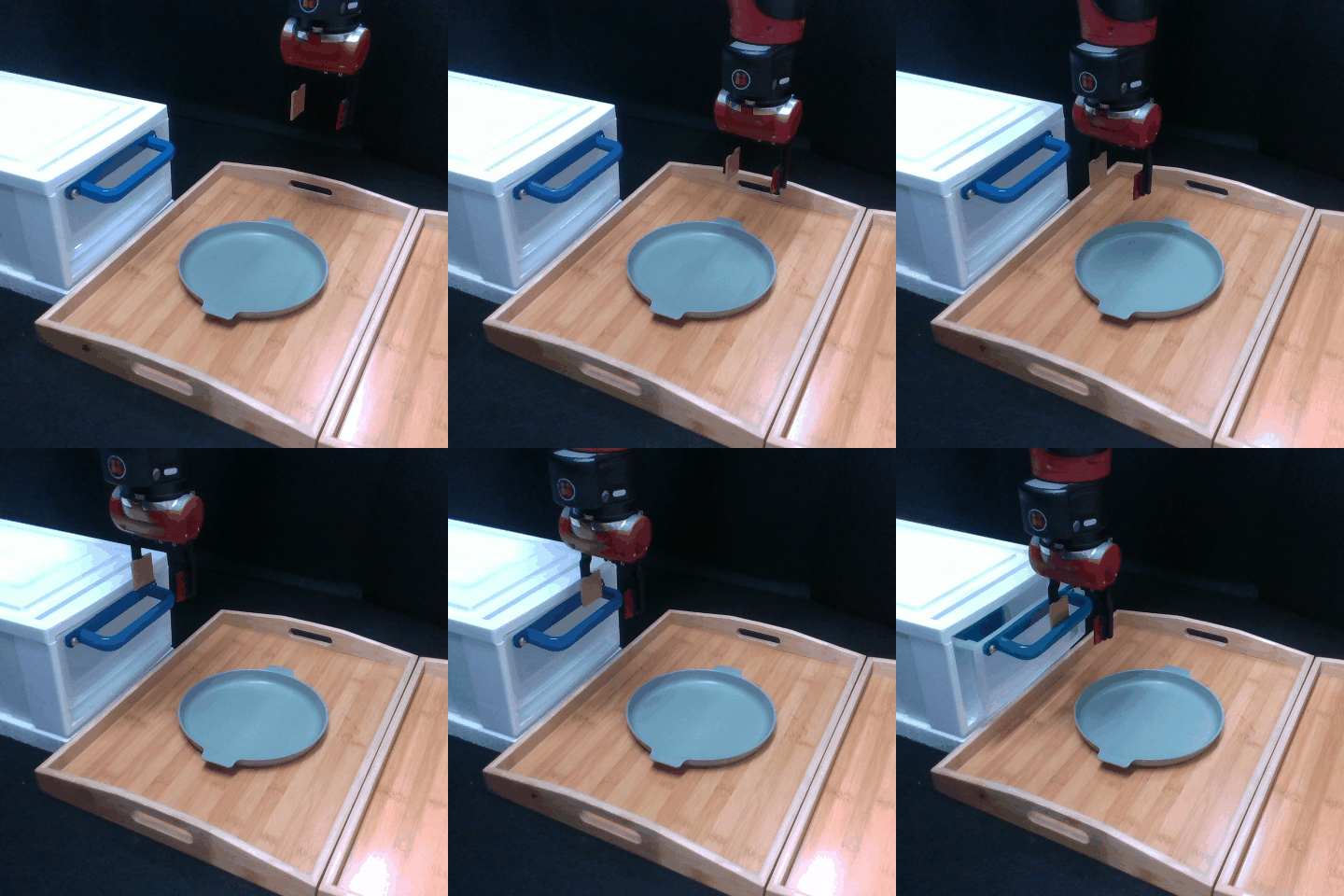
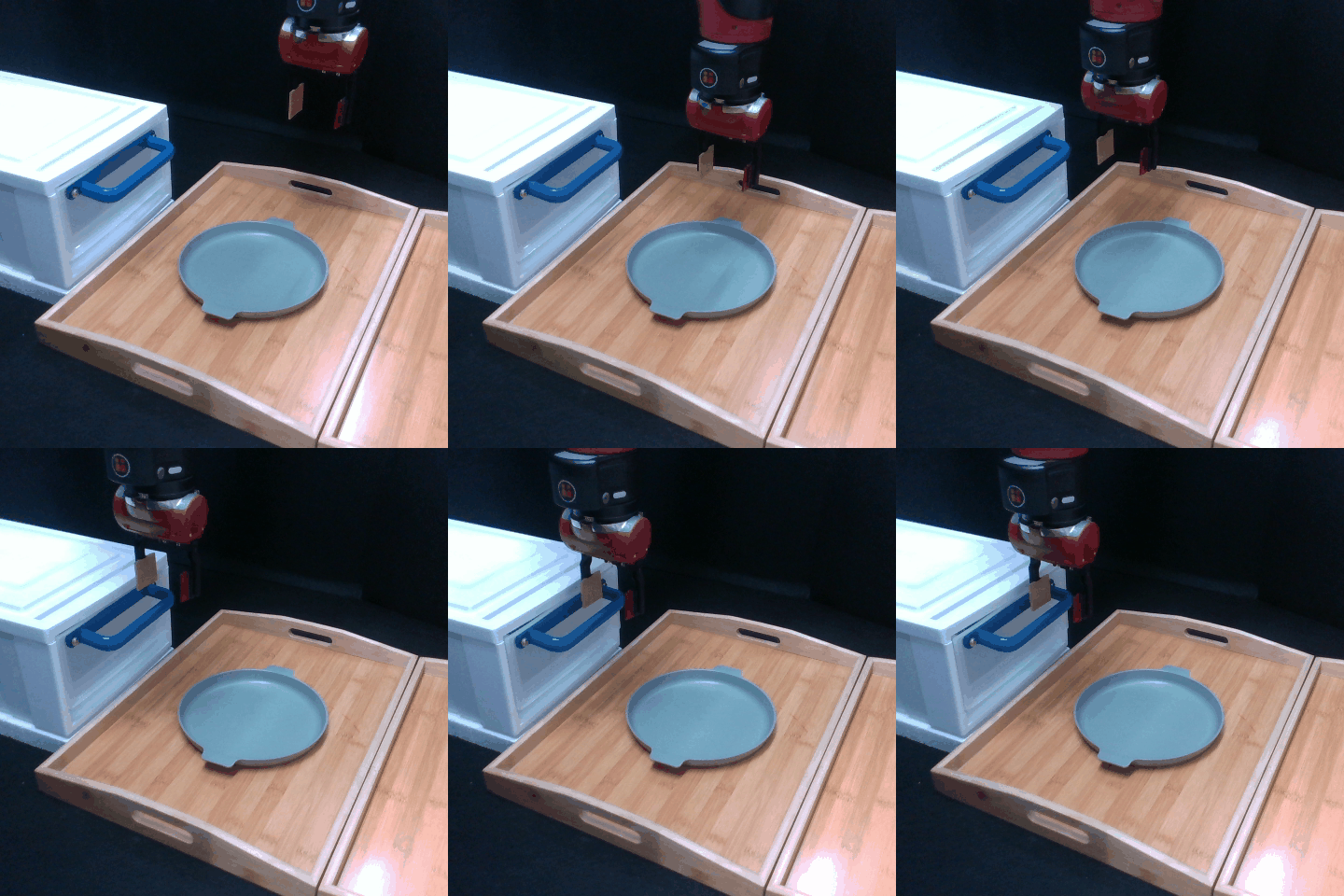
In simulated environments, we evaluate VOTP on Gym D4RL locomotion and MetaWorld manipulation
benchmarks under limited feedback budgets and compare it against state-of-the-art offline
preference-based RL methods. We also evaluate its robustness to visual distractors and
validate it on real-world robotic tasks.
Comparison to Baselines
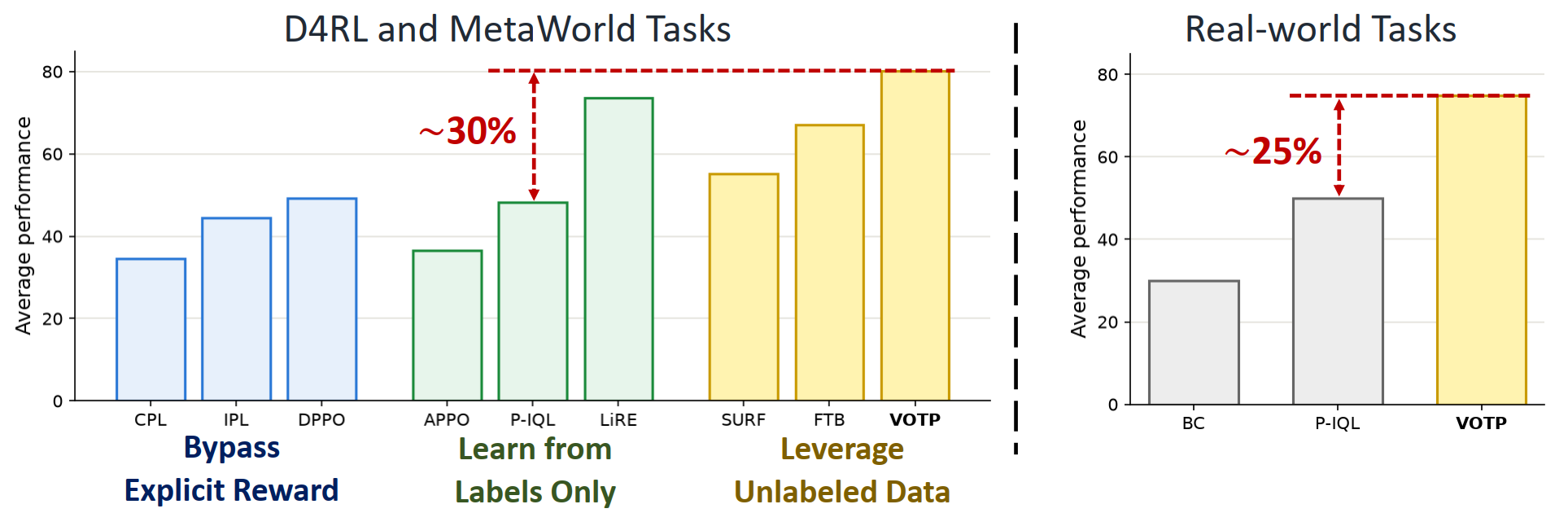
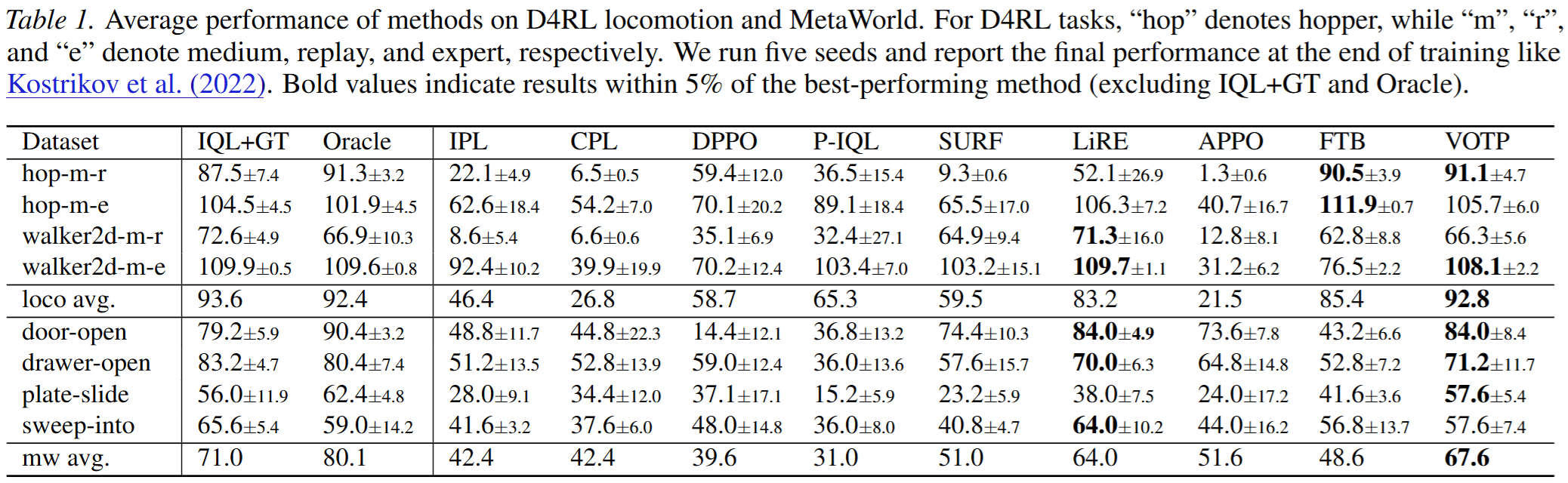
We use IQL as the offline RL algorithm in VOTP. The results show that VOTP achieves strong
policy performance under limited human feedback (e.g., 10 labels). Notably, by leveraging unlabeled data, VOTP
significantly improves performance over P-IQL, which uses the same underlying RL
algorithm but is trained only on labeled data.
OT vs. Other Heuristics
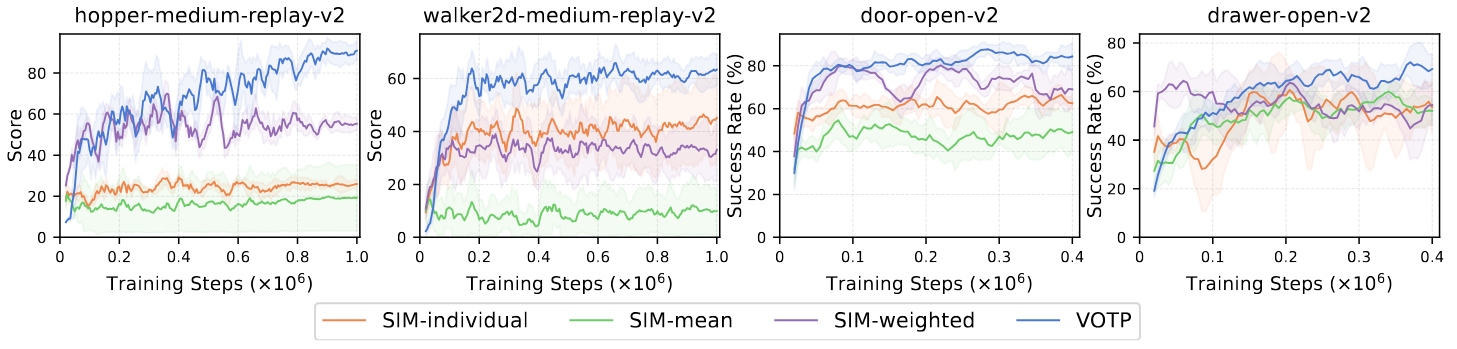
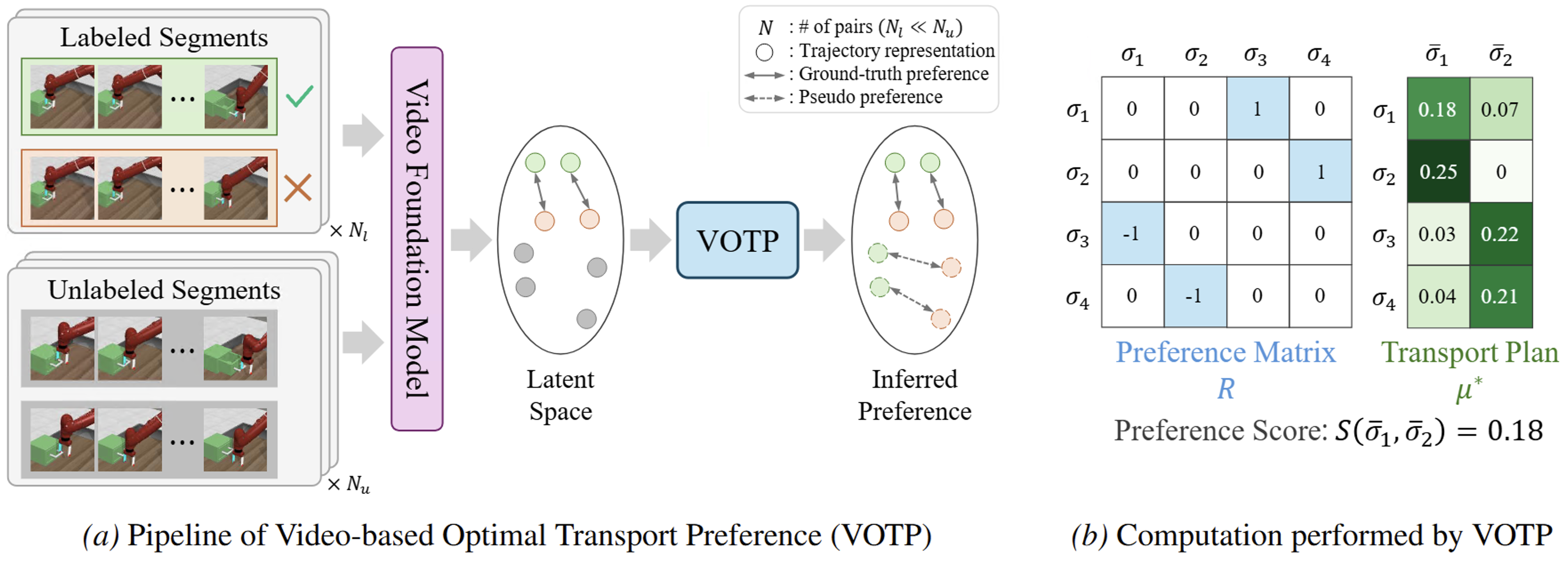
This analysis highlights the role of optimal transport in pseudo-label inference. We compare OT with heuristic methods that infer preferences solely from similarity. Unlike these heuristics, VOTP aggregates preferences from multiple labeled trajectory pairs, weighting each contribution according to the relative alignment strengths computed by the OT plan to produce more reliable pseudo-labels.
Ablation on Different Trajectory Encoders
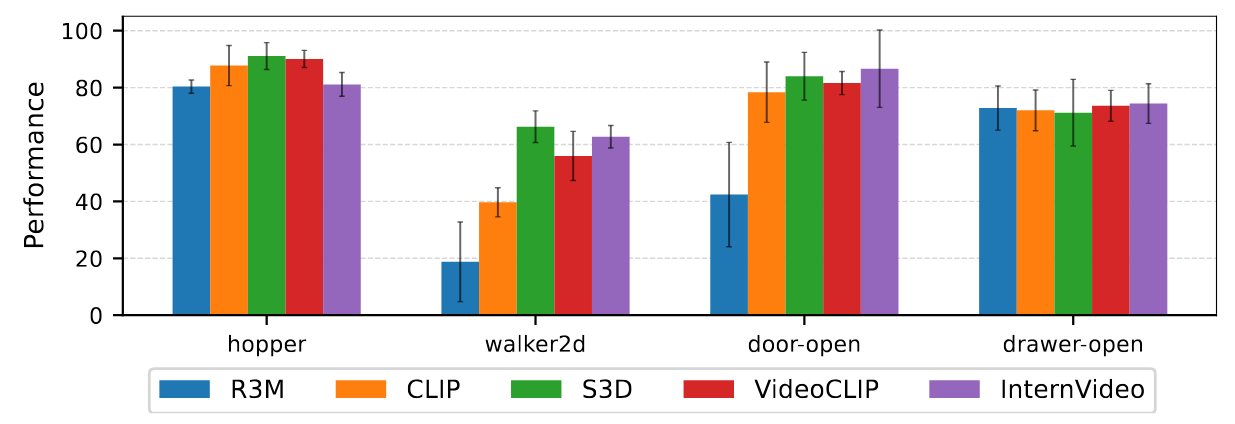
We find that Video Foundation Models generally outperform Image Foundation Models. This improvement highlights the advantage of video representations, which capture temporal dynamics and subtle motion cues to provide richer trajectory representations. These cues are crucial for distinguishing behavioral differences when inferring preferences.
Effect of the Number of Initial Labels
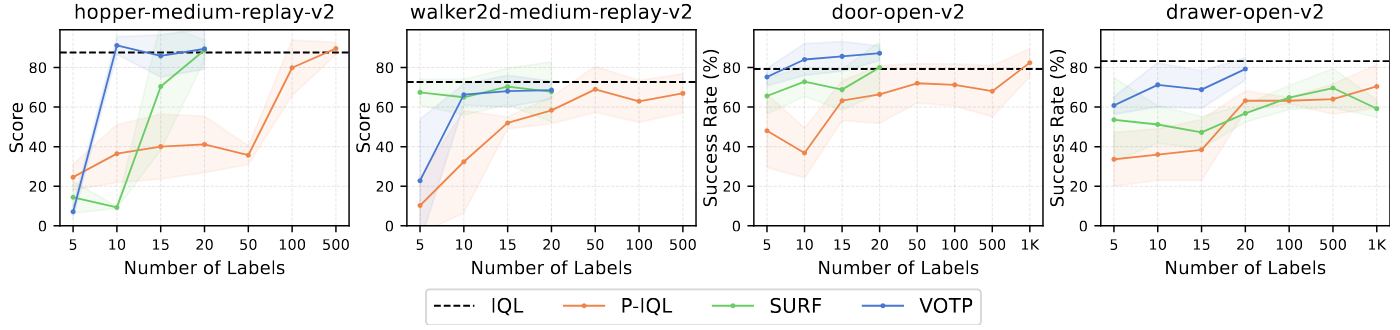
Performance generally improves as the number of initial labels increases. Notably, on the door-open task, VOTP trained with only 10 labels outperforms a policy trained with ground-truth rewards.
Scatter Plots of Estimated Rewards
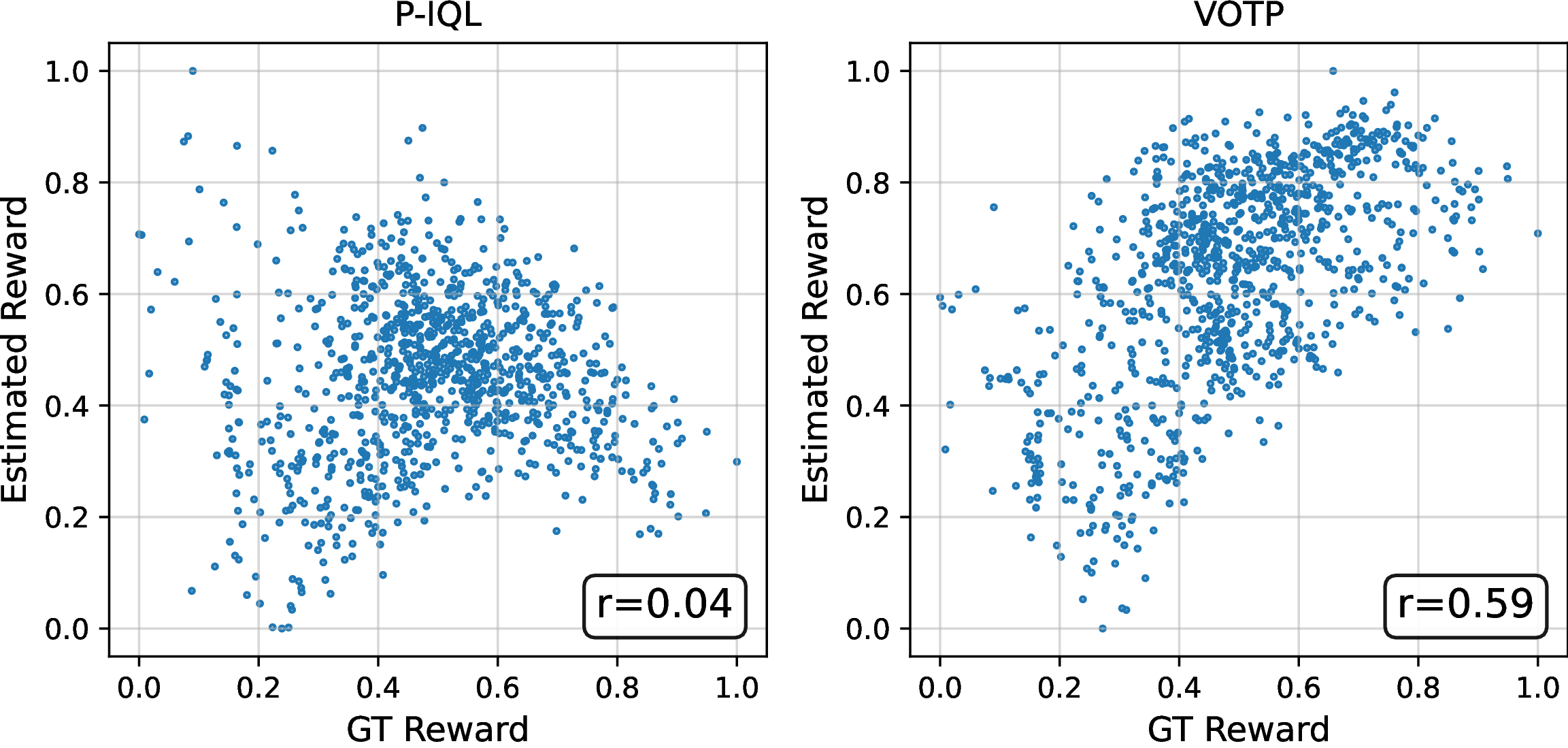
hopper-medium-replay-v2
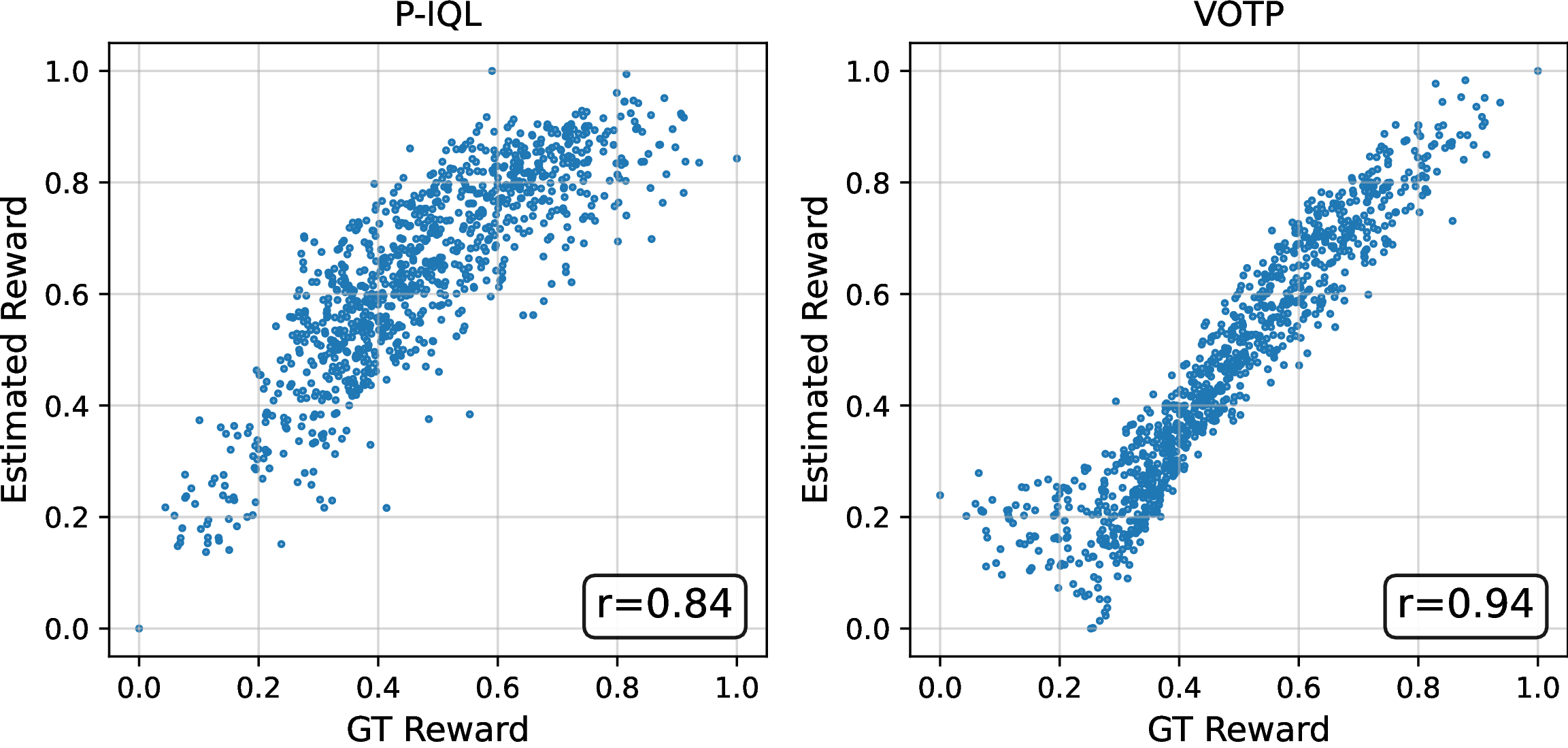
walker2d-medium-replay-v2
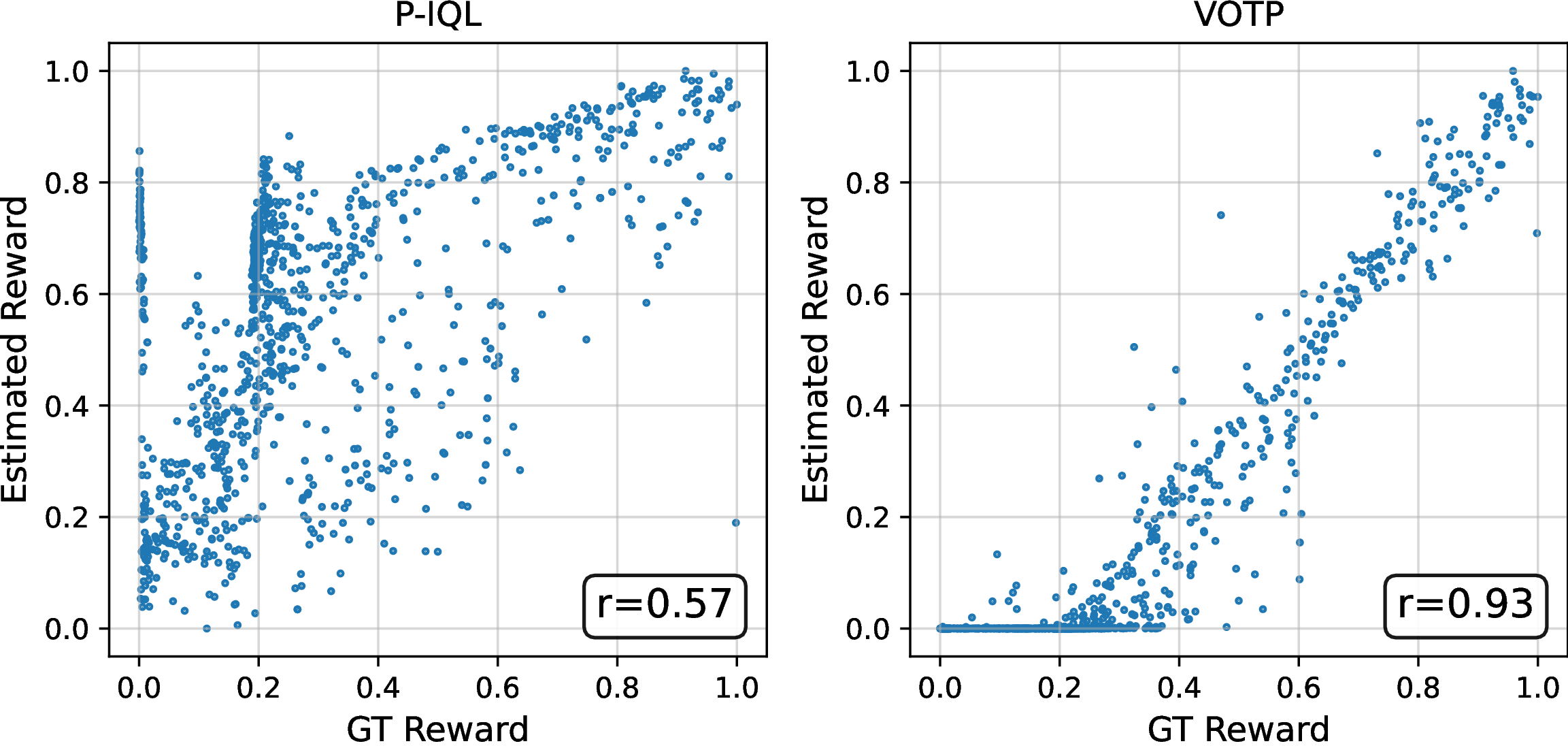
door-open-v2
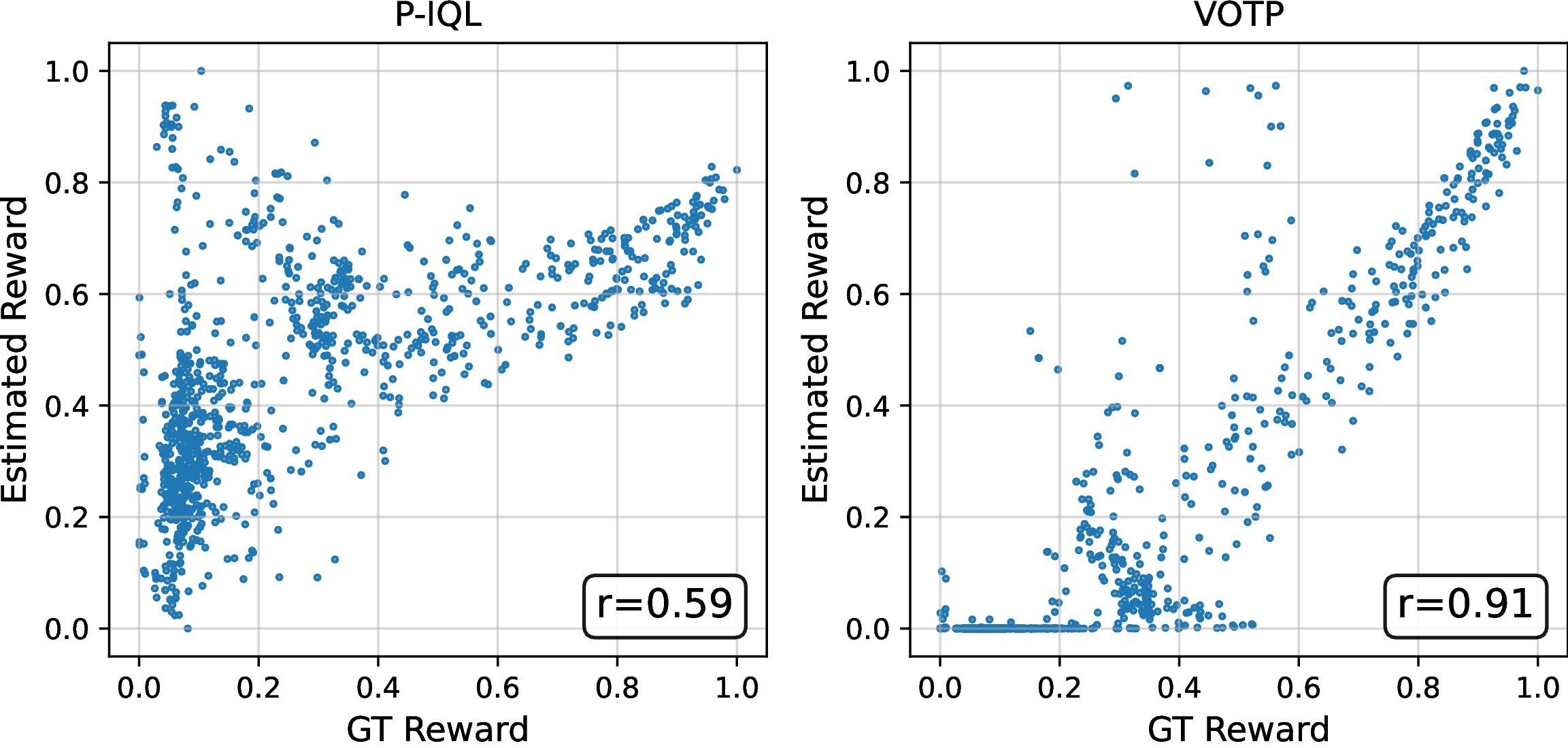
drawer-open-v2
The strong Pearson correlation between the estimated and ground-truth rewards demonstrates that VOTP effectively leverages unlabeled data to learn a more accurate reward model. This improved reward quality explains VOTP's substantial performance gains over P-IQL, which relies solely on labeled data.
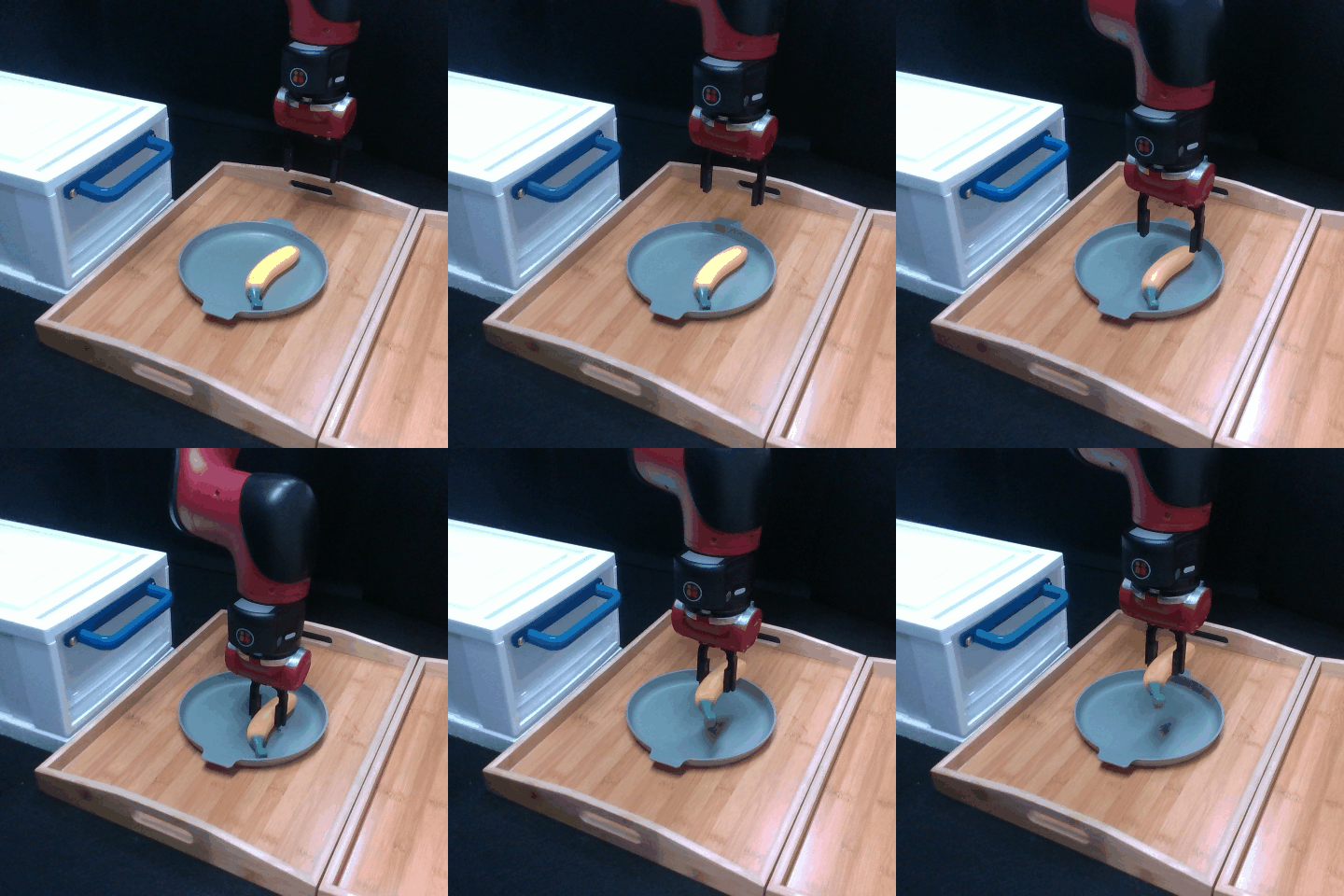
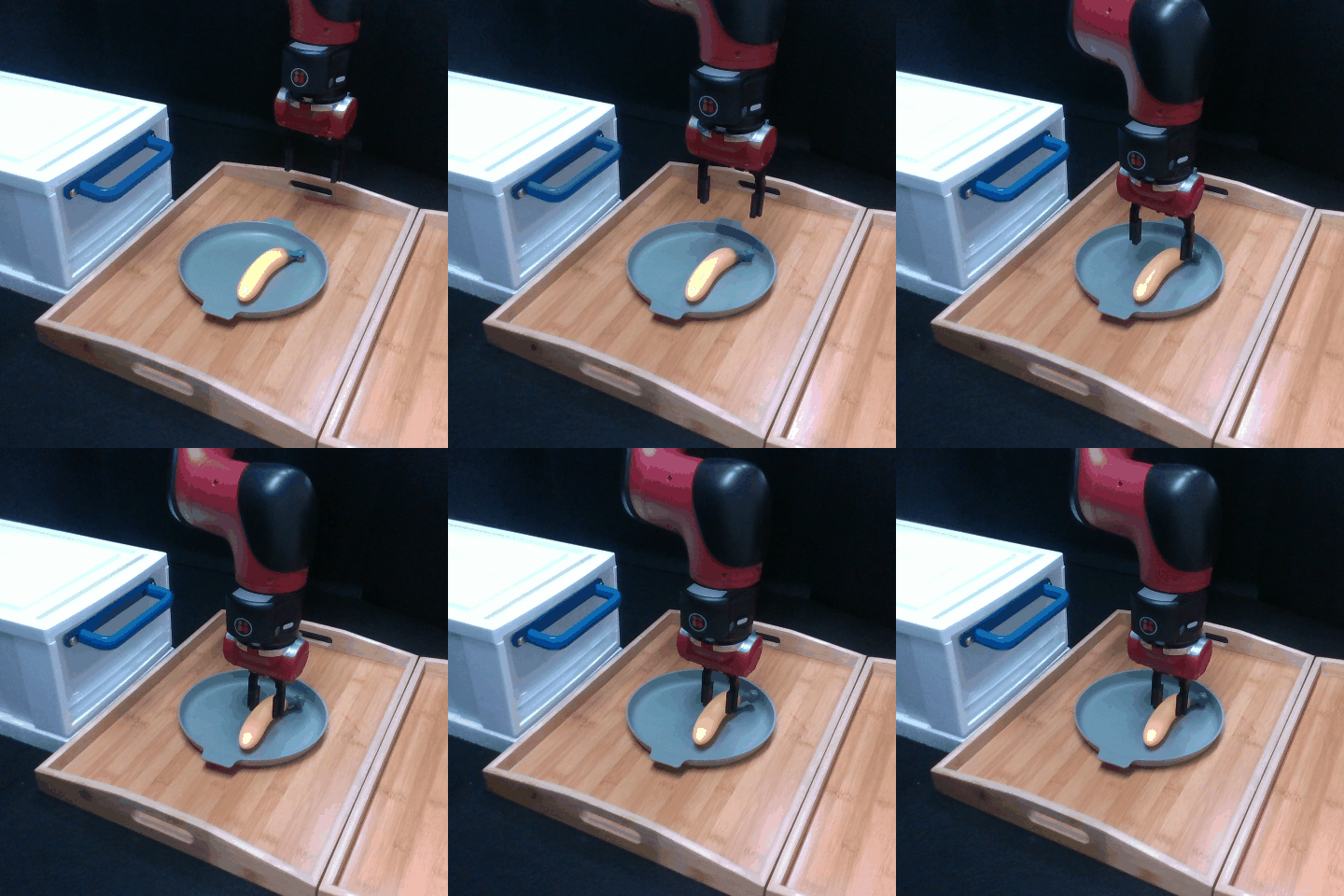
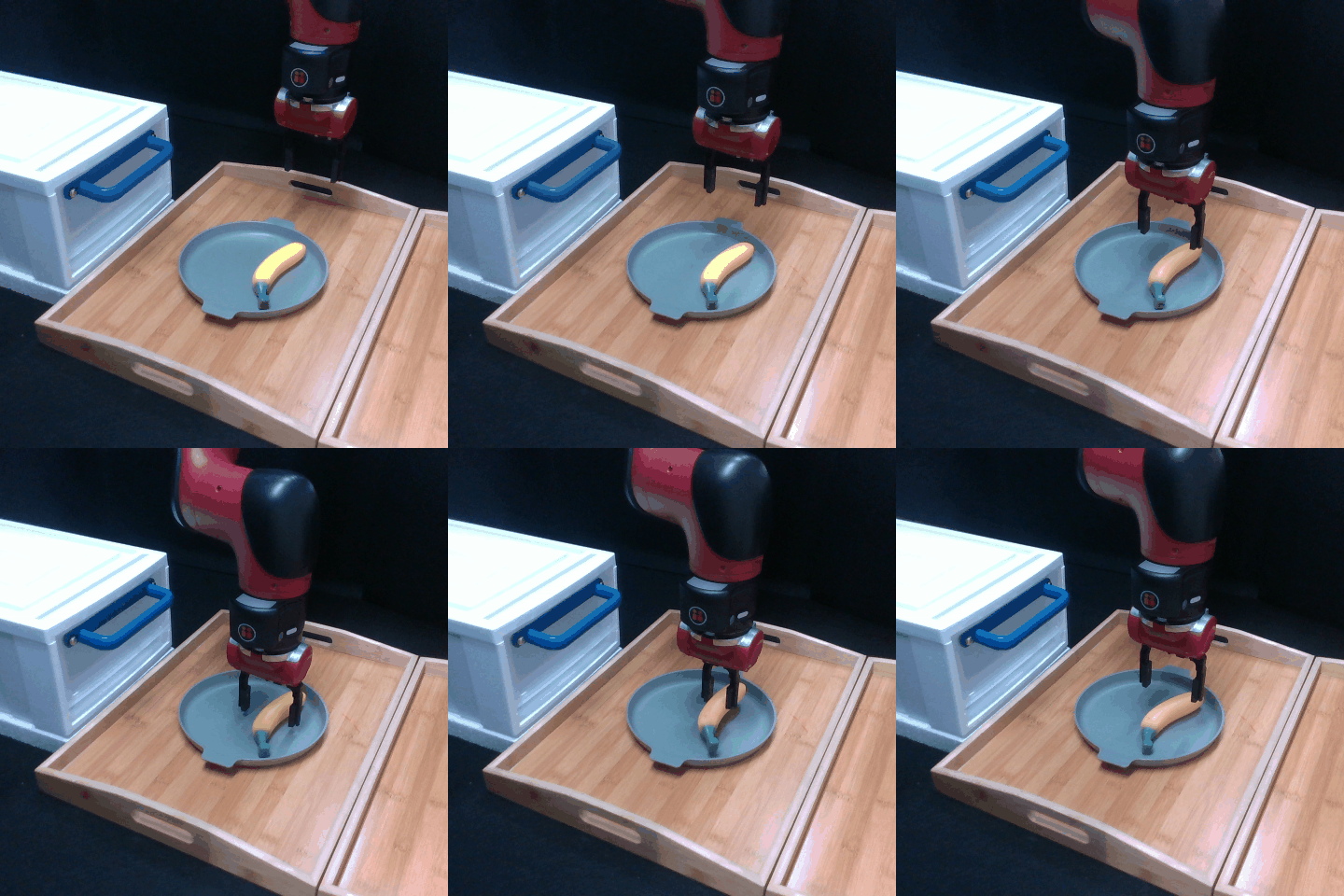
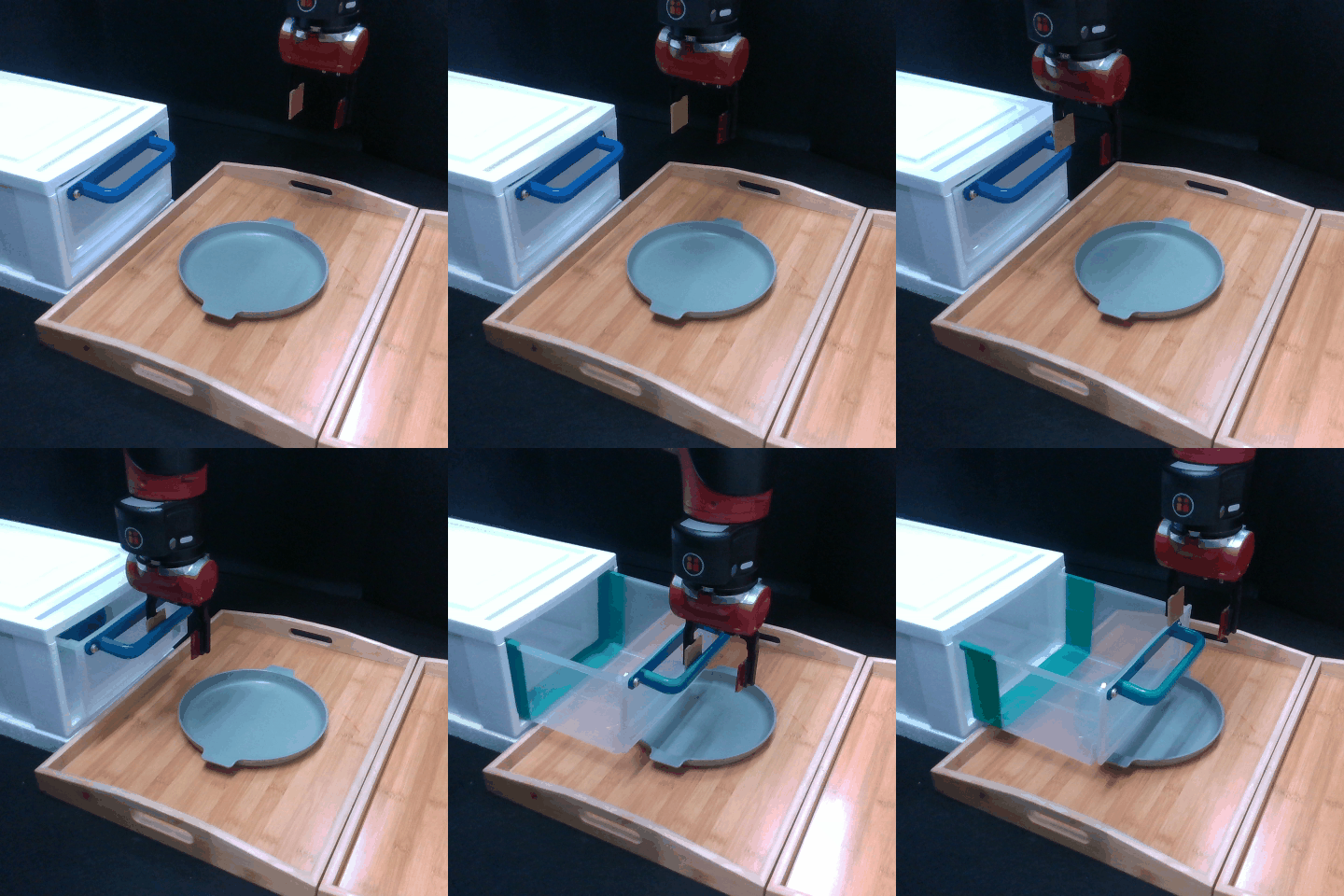
Estimated Rewards on Real-World Tasks
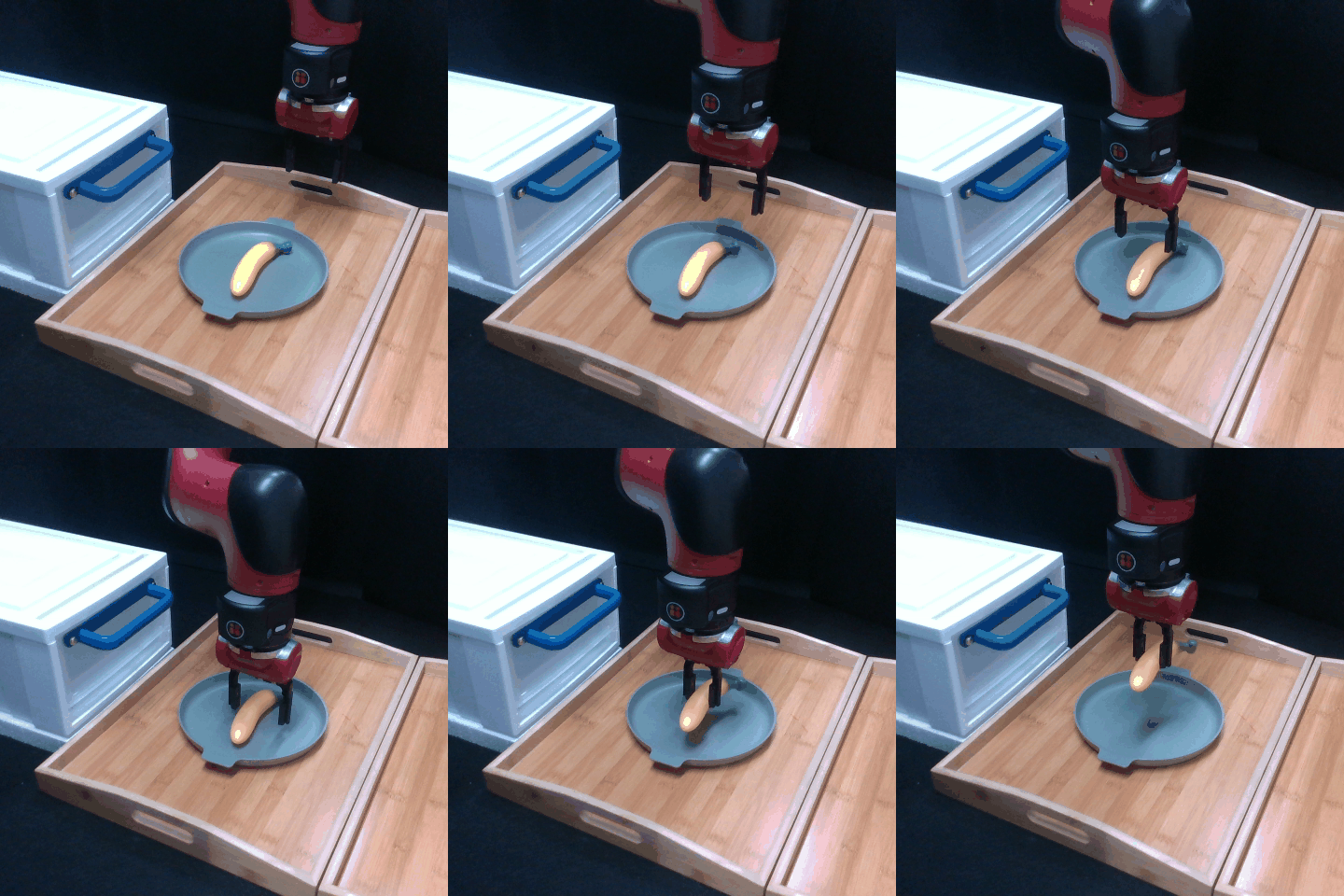
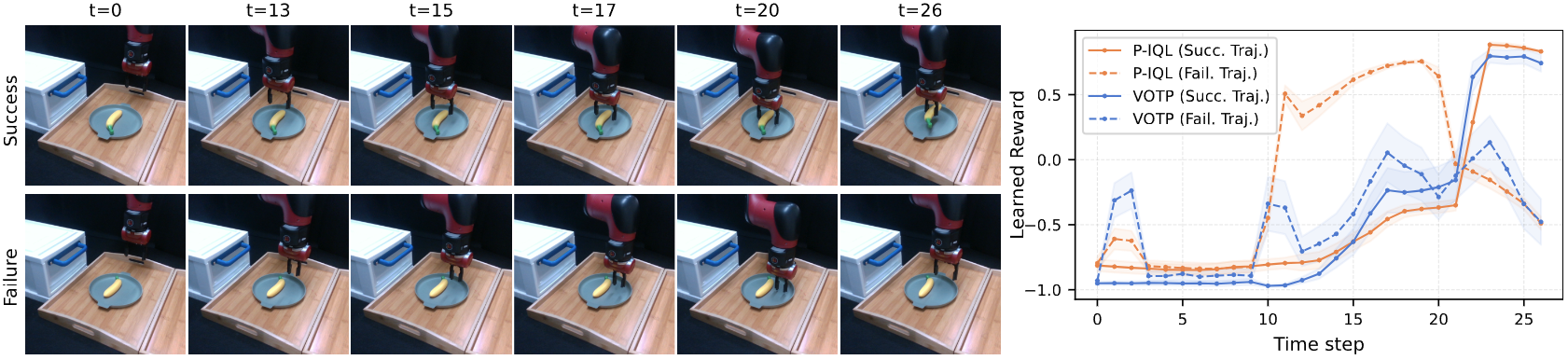
Lift Banana
Drawer Open
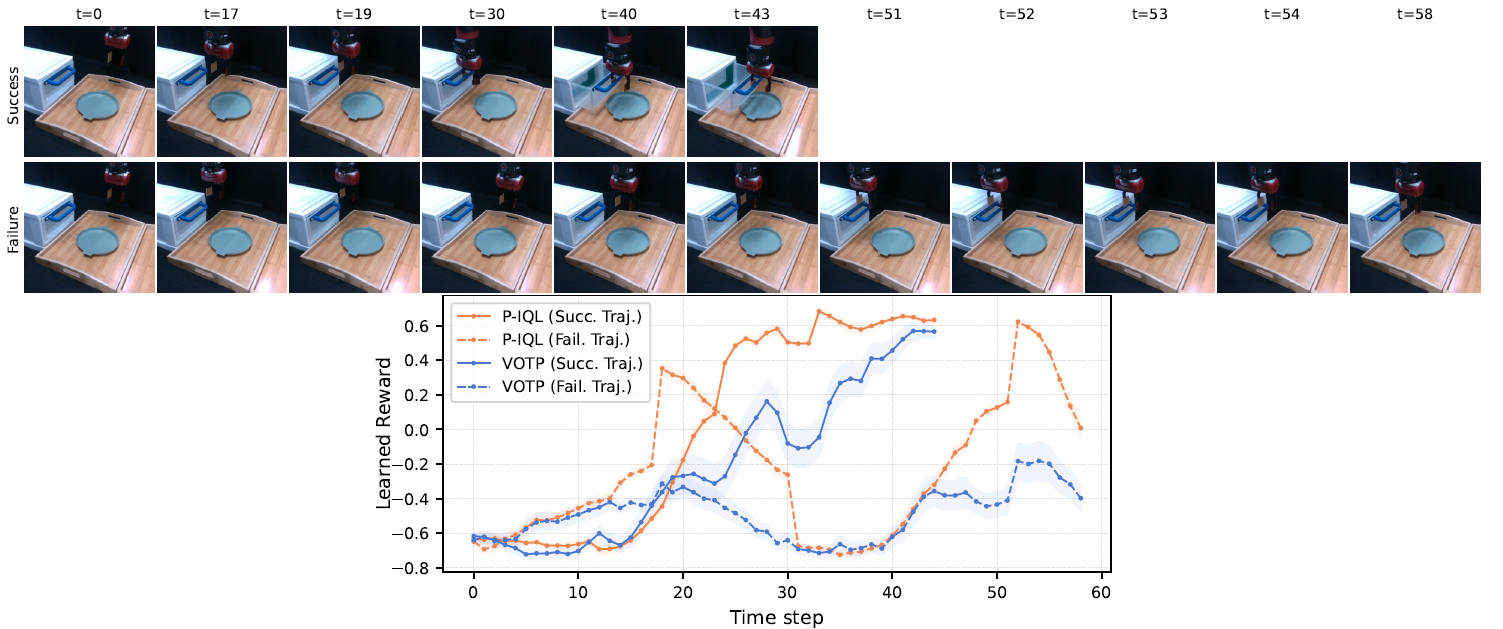
We visualize the learned rewards along successful and failed trajectories. Although both methods correctly assign appropriate rewards to successful behavior, P-IQL mistakenly assigns similarly high rewards to failed trajectories. In contrast, VOTP learns a much more discriminative rewards, clearly separating successful and failed behaviors.